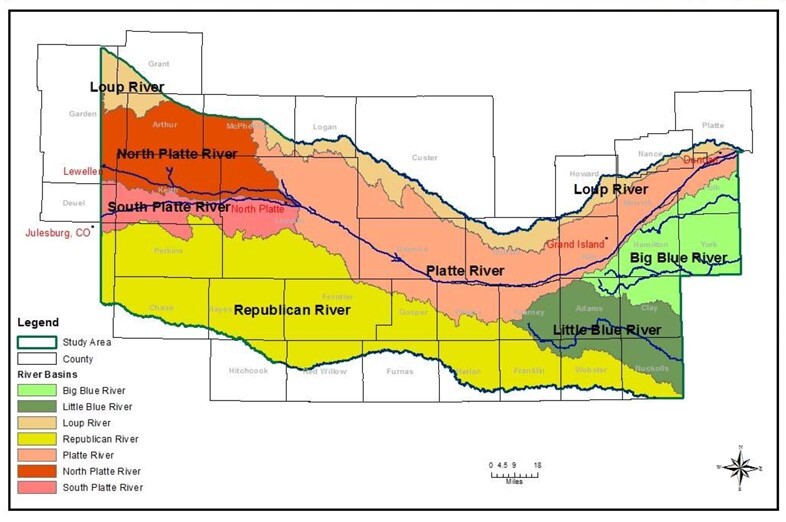
TFG recently completed an update of the crop water use information used by the study’s regional groundwater model. In late 2004, TFG was contracted by COHYST to adapt the application used by the State of Nebraska for consumptive use calculations in the Republican River basin to the COHYST groundwater modeling region. Using the soil water balance model CropSIM, which was developed by Dr. Derrel Martin of the University of Nebraska-Lincoln, TFG merged historical plant development inputs such as planting dates, growing degree day targets, expected tillage operations, and maximum yield potentials with updated irrigation related information. The updated information covered inputs related to soil properties, irrigation management depths, reference crop evapotranspiration rates, applied irrigation amounts, and irrigation efficiencies. The soil water balance model was used to provide estimates of evapotranspiration, deep percolation, and runoff that would occur from a range of cropped and naturally vegetated systems found in the COHYST groundwater modeling region for the years 1950 through 1998.
As part of this project, TFG also updated the calibration of the Hargreaves evapotranspiration equation used in the soil water balance model to the Standardized Penman-Monteith method. The calibration was required due to the limited availability (both historically and spatially) of required climate inputs for the Standardized Penman- Monteith method. Graphical comparisons to previously used reference crop evapotranspiration (ET) values and to weather station reported reference crop ET values were completed. These comparisons showed the impact the improved calibration had on reference crop ET results.
Once the modifications were completed, TFG prepared comparisons of historically published estimates of ET for irrigated corn, dry edible beans, wheat, and alfalfa in Nebraska to those generated by the updated COHYST application as a reference for the groundwater modeling team. A sensitivity analysis was also completed showing the effect adjusting crop growth parameters (e.g. planting dates) and tillage practices would have on predicted average annual ET rates.
This latest update completed by TFG is the third update to the crop water use information used by COHYST. These updates used the modified COHYST soil water balance application with recent historical climate information to extend the crop water use information through 2010. This updated information has been provided to the COHYST groundwater modeling team for use and evaluation as part of on-going work to keep the groundwater models up to date.
Project Photos